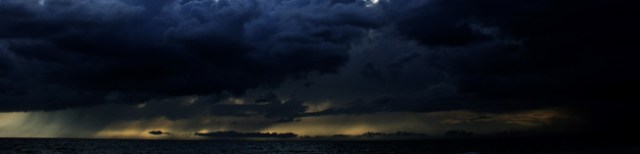
By Hans Shenk
O, do not pray for easy lives. Pray to be stronger men! Do not pray for tasks equal to your powers. Pray for powers equal to your tasks! Then the doing of your work shall be no miracle. But you shall be a miracle. Every day you shall wonder at yourself, at the richness of life which has come to you by the grace of God.
— Phillips Brooks, “Going Up to Jerusalem,” from “Twenty Sermons,” 1886
The day that first set Caleb Peckerman on the long road to adulthood began much like all the other field trips the freshman class had taken: Mrs. Hunning, their homeroom teacher, scrambling to make sure that everyone’s permission slips were turned in, that everyone had lunch money, and that everyone was on the bus, for the ride to the farm.
Caleb spent most of the ride half asleep, staring at the passing suburbs, while cliques carried on all around him. He spent most of the farm tour staring vacantly at animals, daydreaming and drawing circles in the sawdust-y dirt with his sneakers. Throughout all of it, whenever he thought no one was looking, Caleb watched Harper Flegel.
As the fog of a long night of video games and caffeine cleared on the bus, he’d watched her laughing with her softball teammates, sunlight shining on her teeth that were straight without braces, white without bleach. At the farm, he watched her pet the horse and shrink back laughing and wrinkling her nose when it bared its teeth.
Caleb watched her lean against the horse’s fence with the other softball girls, craning to hear the things the handsome tour guide was saying. She was leaning forward, eyes sparkling, anticipating a laugh. Watching her, Caleb’s chest burned with a weary melancholy. All he wanted, he told himself, was to feel the focus of her sun-like glow on his face. To perform some act of valor on her behalf, or to drift into her social sphere and showcase a sparkling wit, anything. All he needed was a chance, to capture her gratitude, her admiration, or just her attention, for a moment.
He sighed, and kicked dirt through the circle he was drawing with his toe. A cloud, borne on strong spring winds, slid effortlessly across the space between Caleb and the horse enclosure, covering the yard in shade.
By the time the tour wound to its conclusion with a “special farm lunch” in a refurbished red barn, the sunny morning had been washed away by sheets of rain. Fluorescent lights hanging off of rustic rafters shed a cold glow on wooden picnic tables. On one end of the cavernous room, cattle stalls had been replaced by a steel-and-glass cafeteria line. The opposite wall was untouched save for educational murals painted on the bottom half, where cows and horses offered advice and facts in cartoon word-bubbles. The side walls of the room were 10-foot-tall sliding doors. The doors on the windward side were pushed shut to keep out the rain.
Lunch was almost over. Some kids were still finishing up their straight-from-the-dairy ice cream, but most of the class was sitting in circles around and on top of the tables, trying to yell to each other over the roar of the storm.
Caleb was sitting alone, close enough to the open doors to feel errant patches of mist. Harper had disappeared — he guessed she was using the restroom —so he was watching the storm, instead. Outside, he could see small branches whip off of the trees in the yard and go whirling away into the maelstrom. The trees themselves bowed and churned in a greenish twilight.
The lights flickered. In his mind’s eye, Caleb was wrapping an arm around Harper’s shoulders as she stared terrified into the storm. He was telling her that it would be alright. They would outlast the elements, they would be fine…
“CALEB!!! CALEB!!!” A hand on his shoulder roused him from his daydream. Mrs. Hunning was grasping at him and bellowing, “CALEB, THERE’S A TORNADO ALERT! WE’RE GOING TO THE BASEMENT IN THE FARMHOUSE.”
Caleb blinked, nodded, and got up. Everyone else was already neatly lined up, walking back past the cafeteria line and into the kitchen. Some of the kids were whispering to each other and giggling, but most were silent and pale. The lights flickered again as Caleb and Mrs. Hunning trotted after the rest of the class. From outside, Caleb heard metal scraping and crashing. Ahead of him, the other students walked in tight, tense rows. They passed into a hallway behind the counter, and the storm became a muffled booming, like heavy machinery in another room.
The class, kitchen staff and chaperones were pressed together against the linoleum walls, and the dirty fluorescent lights made them look like horror movie extras. The tour guide from the morning was standing at the front of the line, his hand on the knob of a door to the outside.
“Alright,” he said, over his shoulder, “When I open this door, I need you to try to stay in your lines, but I need you all to run straight ahead to the house. Don’t walk, run. OK? Stay together as much as you can, but I need you to keep moving.” He stared gravely at them. Someone in the line snickered.
“Hey! This is serious. OK? OK. Ready?” He said, turning the knob.
“What’s going on?” asked Harper, appearing behind Mrs. Hunning, brown eyes wide.
“Ohmygod. Harper. We almost forgot you,” said Mrs. Hunning. She turned back to the door, her face white, skin taut. “Wait!” she screamed, pushing past Caleb, and waving a hand at the tour guide, “We haven’t done a headcount!”
It was too late. The door was flung back on its hinges with a splintering crack, and the tour guide charged out into the storm. Then the whole line was moving, stumbling toward the door.
Mrs. Hunning had pushed ahead of Caleb in her attempt to get a count of her students, and now the motion of the crowd carried her out in front of him and Harper. Acting on a foolish sense of chivalry, Caleb stood aside to let Harper pass. She stared at him, confused, and also standing still. Then she said “OH!” and ran.
The delay had been no more than a second, but already, Mrs. Hunning was gone. Caleb and Harper were alone in the hallway.
He was watching her when it happened. A gust of swirling wind swung the door back violently, just as she crossed the threshold. Harper yelped in surprise, and tried to throw herself out of the way, but the door slammed with a sharp crack, crushing her ankle against the frame. Caleb was too close to stop. He careened into the door, and toppled over Harper out into the storm.
It hit him with a howl. The wind was pushing him down, tearing at him from all sides. The rain stung his skin like hail. He had landed staring up into a sky almost as dark as night, lit with a sickly green. He rolled over, and looked back. His fall through the door had freed Harper’s foot, and she was beside him on the ground, curled around it, shaking.
“Harper!” Caleb struggled onto his knees and crawled to her. She was holding her ankle, eyes wide, lips twisted down in pain. She tried to get up, and toppled back down. A metal barrel went clanging past them, end over end like a Pepsi can.
“Hey!” she screamed, from 6 inches away, “Get me up! Get me up!” She grabbed his shoulders, and as he straightened up, she lunged up onto her good foot, the other hanging awkwardly. Caleb turned toward the house. It was shut up, and dark. He took a heavy step forward, into the rain.
“No,” said Harper, her lips on his ear, “I can’t make it that far. Get in the barn.”
Caleb hesitated. Harper pivoted on her foot and drove her weight against him. “Get in the barn!”
They stumbled back into the yellow hallway. Harper hopping along, her arms wrapped around his shoulders. Caleb was trying to think of ways to get to safety, and of things to say to impress Harper.
“Close the door.” Harper gasped, letting go of him and falling against the wall. The lights went out. Behind Caleb the wind slammed the door again.
“Never mind,” she said, “Oh, god. My ankle.”
Outside, the thunder and wind had gathered into one roaring voice, growing ever louder. Lightning danced like a strobe light across Harper’s grimace, and there was another crash from outside. She looked up,
“We’ve gotta find someplace solid,” she said. Caleb nodded. His stomach was twisting, and icy trails of rain were rolling through the small of his back.
“Let’s go,” said Harper. She lurched away from the wall, put an arm over his shoulder, and they hobbled back into the heart of the barn.
When they reached the cafeteria, the massive sliding doors were clattering angrily against their runners, and rain was whipping in through the doors that had been left open. Caleb stopped, standing beside the cafeteria line. Steam was still curling up from the dishes. He couldn’t comprehend that three minutes ago, he’d been staring out those same doors, lost in thought.
“There might be a closet or something in the kitchen!” yelled Harper. “There’s no way this room is safe.”
Her hands tightened on Caleb’s shirt. He nodded, annoyed at himself for not having thought of it first. They started sideways, past the counter and into darkness of the kitchen beyond. Caleb fished out his phone and by its pale glow they found a sort of janitor’s closet, next to the refrigerator on the back wall of the kitchen.
With a bang, one of the sliding doors on the windward side ripped away from its runners in the cafeteria behind them. Cold, wet wind came shrieking into the barn, grasping at them like the fingers of ghosts.
Harper pulled open the door of the closet with her free hand, and Caleb used his to throw the mops, brooms and bucket out into the middle of the kitchen. They tumbled inside, and Caleb reached up and closed the door behind them.
It was dark, and eerily quiet. Caleb tried to swallow his loud breathing, and failed. He was wet and gasping, and his legs and shoulders ached from supporting Harper’s weight.
“Gosh,” she said, laughing, a little hysterically, “it’s crazy out there. Do you think there’s really a tornado?”
“I don’t know,” said Caleb, “That’s the worst thunderstorm I’ve ever seen, at least.” He checked his phone. There was no reception.
“Well, I guess we’ll just have to wait it out, either way,” said Harper.
It suddenly occurred to Caleb that their legs were tangled together on the floor. Embarrassed, he pulled his back, brushing against her ankle.
She gasped, and flinched away.
“Oh, sorry, sorry,” he said.
“It’s OK. I’m OK. It just hurts,” she said. For another moment, there was no sound but breathing, then Harper said,
“I just hope I can still play softball.”
“Yeah. Yeah,” said Caleb, trying to think of something to say. “You really love softball, huh?”
“Yeah,” she said. “Yeah, I guess so. It’s just … what I’ve always done. It’s what all my friends do. I dunno.”
She let out a long breath, deflating in the dark,
“Is it —” started Caleb, but before he could finish, Harper stiffened,
“Omygodohmygodohmygod!”
She reached out in the dark, and grabbed Caleb’s shoulders again, dragging him close with the strength of sheer terror. A noise was pulsing through the walls. It was like a roll of thunder, a roll of thunder that never ended. Harper curled into a ball, her arms locked around Caleb’s shoulders like vises, her face crushed against his chest, sobbing in fear. The noise rose on all sides, deafening, all-consuming. Caleb braced himself against it. The sound grew louder. Suddenly, he was cold, unimaginably cold. His breath caught. The air was gone from the closet. I’m dying, he thought, This is it. This is how it feels to die.
The noise, and the cold and his fear blended together into a white pain that spread his whole mind and body, driving out conscious thought. He forgot where he was, or what was happening. He was alone, impaled on the point of a pyramid, suspended on the peak, and a howling malevolence was pushing him over, and down into an edgeless void. He was slipping, slipping, down into oblivion, into a darkness that had no borders, and no bottom. The noise drove him downward into nothing.
His eyes opened, and he saw a slender ray of light, shining on dustmotes. The noise was gone. Before he remembered himself, before he remembered his name, well before he remembered anything he’d ever felt about Harper, he felt two things: a terrible pain in his back, and a joy welling from the profoundest depths of his chest. He was laughing, and crying, all at once, for the beauty of the needle of light and the glory of the pain in his back. He moved his head sideways, and the light fell across the face of a girl, pinned beneath him.
“Harper,” he said. He could not believe how beautiful she was. How the ray of light penetrated just beneath her skin, and made her glow from inside.
“Harper,” he said again. Now he felt himself filling up the corners of his body, returning to life. He said her name gently. Her eyelid fluttered.
“Harper,” he said a third time, struggling a little to find the air to speak.
She looked up into his eyes. Hers were rimmed in red from tears.
“Good morning,” he said. He wasn’t sure why he’d said that, “I’d move if I could, but I can’t.” He coughed a little, and it hurt. He drew in another breath, working hard.
“Are you OK?” she asked, staring up.
“No, no I don’t think so,” he said, slowly. “My back hurts a lot.”
Only when she moved them did he become aware that her arms were still wrapped around him. She ran one hand slowly down his back and stopped just above the center of the pain.
She swallowed hard, and spoke in a small voice.
“There’s something in your back.”
“Like, stuck in my back?”
Harper swallowed again,
“Yeah.”
He didn’t know what to say. Nothing in the first 15 years of his life had prepared him for this. It occurred to him that she would see that he was crying, and he wanted to make sure she understood the reasons.
“I’m not scared,” he said, abruptly, almost angrily.
Harper blinked.
“I was,” he said, hurrying, trying to fit the words into one painful breath. “I was scared when the tornado hit, and I thought I was dying. But now, I’m not scared. I’m, I’m just glad to be alive.”
Harper nodded, but he saw that she was biting her lower lip. His shirt was still damp from the rain, but a new warm wetness was trickling across it. Crushed up against Harper in the crumpled ruins of the closet, breathing laboriously in the darkness, Caleb felt such elation and clarity that he knew he was dying. No one could feel this way, and then go back to normal life. He must be dying.
“I’m not scared!” he said again, “Because death is just an edge. You know? Everything has edges — I’m only scared of empty space, with no edges. That’s all I’m scared of.”
“Caleb,” said Harper, “Caleb, I don’t know what you’re talking about.”
“Harper,” he said, “Harper, you have to understand. You have to remember.”
“Remember what?”
“All of it, Harper! All of it.”
“Caleb, you’re scaring me,” she said. Her eyes were welling up again.
“Don’t be scared.” he said, “Don’t be scared. Death is just another edge.”
Caleb’s euphoria was mingling with light-headedness. He still felt as though he understood, and saw everything, but the particulars of the moment were starting to swim.
Everything was dark, again. He couldn’t tell if the shaft of light was gone, or if his eyes just weren’t working. He’d been trying to hold himself up so Harper’s head wasn’t pinned against his chest, and now he found that he was resting on her forehead again. Even through his shirt, her skin felt warm, almost hot. He shivered.
“Sorry, sorry,” he said, and tried to straighten up, again, but found himself sinking down.
He was ambling down the bank of a clear, green river. I’m dreaming, thought Caleb, I’m falling asleep. At a time like this.
“Harper,” he said, swallowing twice. His mouth was so dry. “Harper! Hey, Harper,” he said, into the darkness.
“Hey, I just, I want … I just … I used to think that if, if sometime, for some reason, you and me were, if we were trapped together, then — I just wanted to be cool, and brave.”
“Sorry,” he said, “Sorry, I’m not making sense. Look, just so you know, I would’ve given anything to get trapped together with you. I thought that if something, if something like this happened, that I’d, that I’d be brave, and I’d save us, and we’d just wait it out, and we’d be OK, and you’d … you’d ….” He ran out of air. He drew another breath in, struggling to fill his lungs,
“Look,” he said again, “Look, just so you know, I think you’re beautiful, and you’re smart, and you’re brave, and you know, you know …” he stopped, and closed his eyes, and when he closed them, he could see the river again, and now it was up past his ankles. He knew it wasn’t wide, but the far shore was dark, and hidden from him. He felt a sudden desire to cross.
“You know,” he said, “I can’t be the only one who thinks that.”
Harper said nothing. Caleb couldn’t tell if she was trembling, or if it was just the ripples in the river, gently shaking him as he waded out into it. Suddenly, as though from far away, he saw the shaft of light again, and heard Harper say something in a deep, garbled voice that he couldn’t understand.
Caleb cracked two ribs, suffered a concussion and lost between 25 and 30 percent of the blood in his body. For two days, he drifted through dream worlds and fog, and when he came to himself again, his survival was already old news. He and Harper appeared on only three front pages, all local, and were mentioned on two regional television programs.
Each time the media inquired, Harper told the same story: she was late catching up to the class; the door slammed on her and broke her ankle. She told the reporters how Caleb had stopped to help her, how he’d carried her to the closet, and protected her with his body, and it had almost killed him. She said she didn’t blame the tour guide or Mrs. Hunning for leaving them behind, and she didn’t think it was right that they were both losing their jobs because of it. She said she was looking forward to when Caleb woke up, so she could thank him properly.
Shared trauma often forges a lasting bond between survivors, who have known each other in states of mind and extremities of situation that reveal secrets the closest friend or loved one cannot hope to discover. But circumstance is a careless craftsman, and the weld is haphazard. The ties we didn’t choose often take on shapes we wouldn’t choose.
When Caleb woke, he found that he and Harper could not make eye contact without a deep understanding passing between them. But then, he also found that every time he met her eyes, or heard her tell the story, he was left staring at his hands or changing the channel, or putting the newspaper down. Not once did she mention that she — hobbling on a freshly broken ankle had been the mastermind of their survival — nor did she mention his ravings about death, edges and edgelessness, and not once did she mention, even to Caleb, his last passionate speech. He was grateful for her silence, but even his gratitude made him feel ashamed.
During the week he spent in the hospital after he woke up, Caleb discovered that he could not even daydream about Harper without replaying the tornado. In memory, his few, mild failings that day seemed to him to be the work of a coward, and a madman, and he lay wracked by shame and regret. And sometimes, as he lay, miserable and completely still, he felt the surging energy of life and joy of living pulsing through him, and throbbing in his fingertips. And he would stare at the ceiling, and try to make sense of the anguish and the exultation.
Harper missed the rest of her freshman year of softball because of her broken ankle, and when softball started up the following year, she chose not to participate. For the whole of that school year, she kept a note that read, “You’re beautiful, you’re brave, you’re smart … and I can’t be the only one who thinks that,” taped to the inside of her locker, and especially on days when the softball team was playing, her gaze would linger on it.
At the end of the year, it was the last thing she took down when she cleaned her locker. She read it again, and stood, staring at the empty space where it had hung. Then she took a red sharpie out of her backpack, circled the words “I can’t be the only one who thinks that,” and stuffed the note into her pocket.
A little over a year after his brush with death, on the second day of summer vacation, Caleb was exploring a pile of boxes in his parents’ basement, and came across a box in which his mother had preserved all of the newspaper articles written about the incident. For the first time, he discovered that he wasn’t repulsed by the very thought of reading them. It had been months since he’d last spoken to Harper, and the shame had finally begun to fade. So he took them out, and sat down on the floor to read.
Initially, he was amused by how very different Harper’s story was from what he remembered. And then, at the bottom of the second story, he read,
“I know he saved my life. If he hadn’t been there, I couldn’t have made it inside, and if he wasn’t shielding me, that beam would’ve hit me in the head. I just can’t wait until he wakes up, so I can really thank him.”
He sat and stared at the quote, and then he read the other two articles again, focusing on the quotes from Harper.
When he was done reading, Caleb leaned back against the stack of boxes.
“Oh, my gosh,” he said. “I’m an idiot. I’m an idiot.”
He got up, put the newspapers back in the box, and walked upstairs.
His mother was sitting at the kitchen table with a cup of coffee and a book. She looked up,
“Hey,” he said, “does the library do first-aid classes?”
“I think so,” she said. “I thought I saw a poster about it last time I was there.”
“OK.” He moved toward the door. “I’m going to the library.”
“Alright,” she said, “but the car’s in the shop, so I can’t give you a ride until your dad gets home from work tonight.”
“That’s fine,” said Caleb, “I’ll walk.”

 “It’s miserable,” the knight said. This seemed logical. It was about noon, 85 degrees or so with no breeze, and he was completely encased in steel armor that must have felt like a frying pan after hours in the sun. He was trying to chew on a greasy leg of lamb, but his visor kept slipping down. Sweat rolled down his face and disappeared down somewhere inside the armor, where it was free to go wherever it wanted.
 sacredcowmagazine.com